From CQI initiative to credentialled educator and beyond: Annie Xu’s story
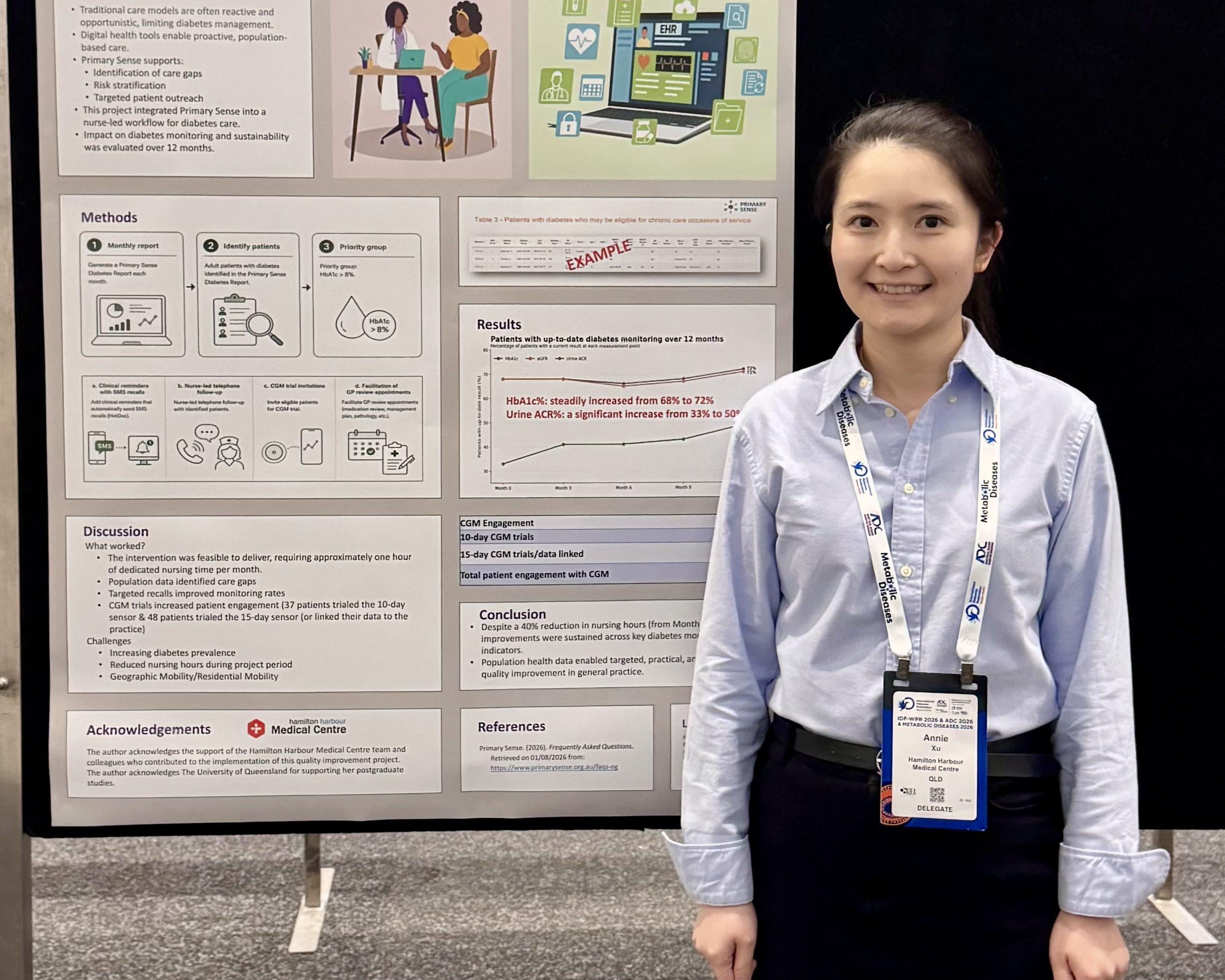
For Annie Xu, a PHN-led continuous quality improvement (CQI) initiative reignited her interest in diabetes education and reinforced for her the positive impact that proactive, patient-centred care can have on health outcomes. She’s since gone on to become a credentialled diabetes educator and most recently, presented her study, ‘Leveraging Population Data to Drive Diabetes Care Improvements in General Practice’, at the Australasian Diabetes Congress. We talk to Annie about the journey.
Can you tell us a bit about your involvement with the PHN’s diabetes CQI initiative and the impact it has had on you professionally?
I completed a Graduate Certificate in Diabetes Education and Management several years ago with the goal of becoming a Credentialled Diabetes Educator (CDE). At the time, however, the credentialling requirements involved a substantial number of practice hours and I found it difficult to accumulate sufficient experience while balancing other professional commitments. As a result, I did not pursue credentialling as actively as I had initially hoped.
My involvement in the PHN's diabetes CQI initiative, together with changes to the Australian Diabetes Educators Association (ADEA) credentialling requirements, made becoming a CDE a much more achievable goal.
Through the CQI initiative, I gained a much deeper understanding of the patients with diabetes in our practice. Utilising Primary Sense, population health data helped make these patients more visible, enabling me to identify those at highest risk and work collaboratively with GPs to improve their diabetes management and glycaemic outcomes.
This experience reignited my interest in diabetes education and reinforced the positive impact that proactive, patient-centred care can have on health outcomes. I now work as a CDE and am pursuing further study as well.
What made you want to become a diabetes educator in the first instance?
Diabetes is one of Australia's most significant and rapidly growing chronic health conditions. The number of Australians living with diabetes has increased dramatically over the past two decades, and diabetes now affects around 1.3 million people across the country. According to the National Hospital Morbidity Database, over 1.3 million hospitalisations were associated with diabetes in 2023-24, accounting for approximately 11 per cent of all hospitalisations in Australia. Diabetes also disproportionately affects Aboriginal and Torres Strait Islander peoples, people living in socioeconomically disadvantaged communities, and those living in rural and remote areas.
As a nurse working in primary care, I see first-hand the impact diabetes can have on people's health, wellbeing and quality of life. I also see the difference that timely education, support and effective self-management can make in preventing complications and helping people live healthier lives.
I wanted to become a diabetes educator because it allows me to support people at every stage of their diabetes journey. Diabetes education is about more than managing blood glucose levels. It is about empowering people with the knowledge, skills, and confidence to make informed decisions about their health and maintain their independence.
I am particularly passionate about helping people understand their condition, navigate treatment options, and make sustainable lifestyle changes. Seeing patients gain confidence, improve their diabetes management, and achieve better health outcomes is one of the most rewarding aspects of my work.
Through your studies, you recently conducted research that you were invited to present at the Australasian Diabetes Congress. Can you tell us about your research and the Congress?
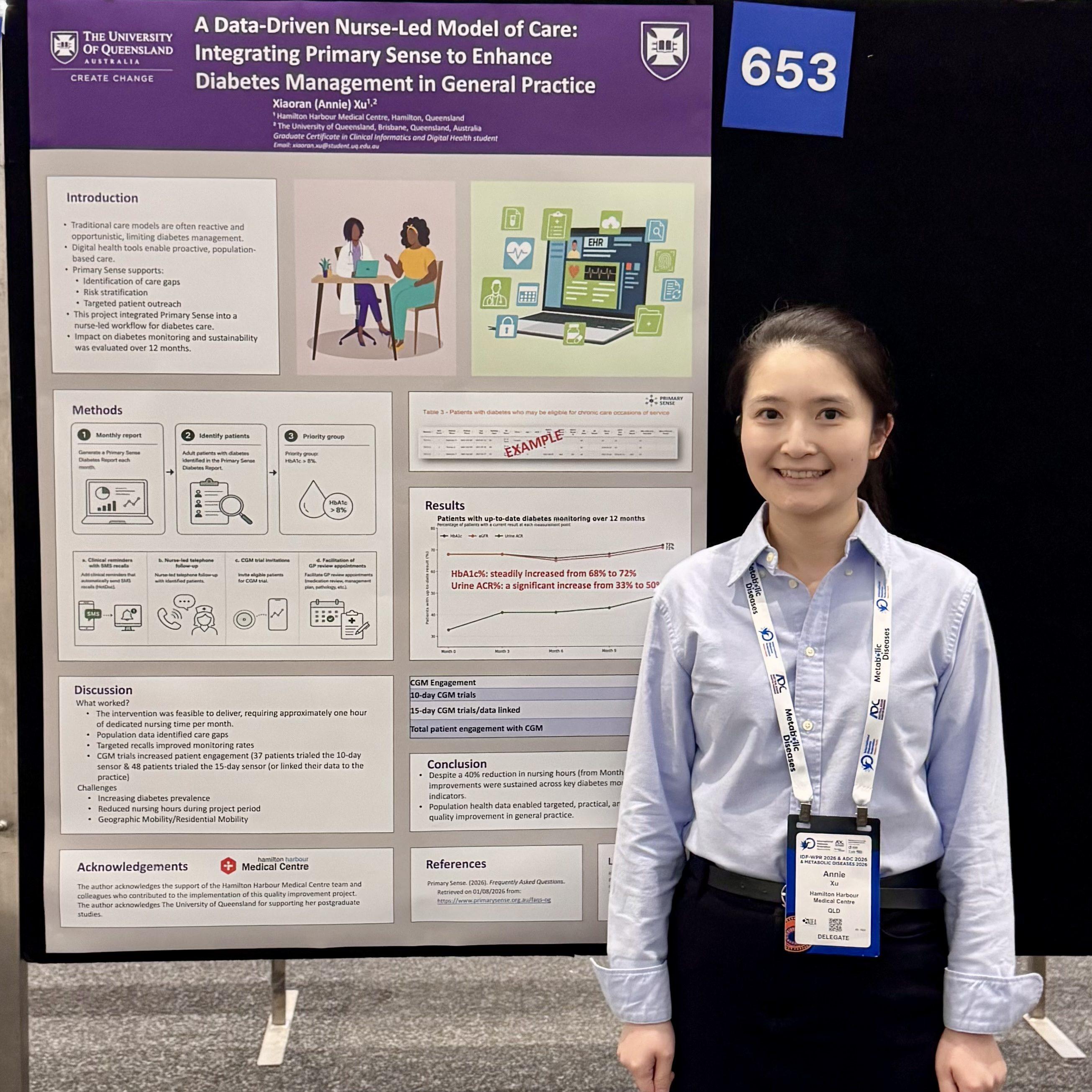
My conference presentation was titled, ‘Leveraging Population Data to Drive Diabetes Care Improvements in General Practice’. The project aimed to increase the proportion of patients with diabetes who had an up-to-date HbA1c test within the recommended three-month period and to evaluate whether improvements could be sustained over a 12-month period.
Using Primary Sense population health data, we identified patients living with diabetes and a priority cohort of patients with HbA1c levels greater than eight per cent. Population health data enabled us to identify patients who required additional support and target interventions more effectively.
The presentation generated considerable interest among conference attendees, particularly regarding the use of population health data tools in primary care to support diabetes management and the conference in general reinforced the importance of collaboration, innovation, and patient-centred care in improving outcomes for people living with diabetes.
It also highlighted how fortunate we are to have access to a healthcare system that supports evidence-based diabetes care and ongoing professional development.
What would you say to other practices about the PHN’s CQI and practice development initiatives?
I would highly recommend participating. The support, resources, and expertise provided by Brisbane North PHN can help practices identify opportunities for improvement and implement changes that benefit both patients and healthcare teams. Building healthier communities is a shared responsibility and the PHN offers practical support to help practices achieve that goal.
What is next in your professional journey?
I am currently completing a Graduate Certificate in Clinical Informatics and Digital Health at The University of Queensland. This study is helping me develop a deeper understanding of how digital technologies and health data can be used to improve patient care and health outcomes. In the future, I may consider pursuing a Master of Philosophy degree when the time feels right.
Professionally, I plan to continue working in diabetes education and chronic disease management, supporting people living with diabetes to improve their health, prevent complications and lead healthy, fulfilling lives. My experience with quality improvement and population health data has strengthened my interest in combining clinical care, digital health and education to improve outcomes for people with chronic conditions.
-
-
 14/09/26 | Primary care impact
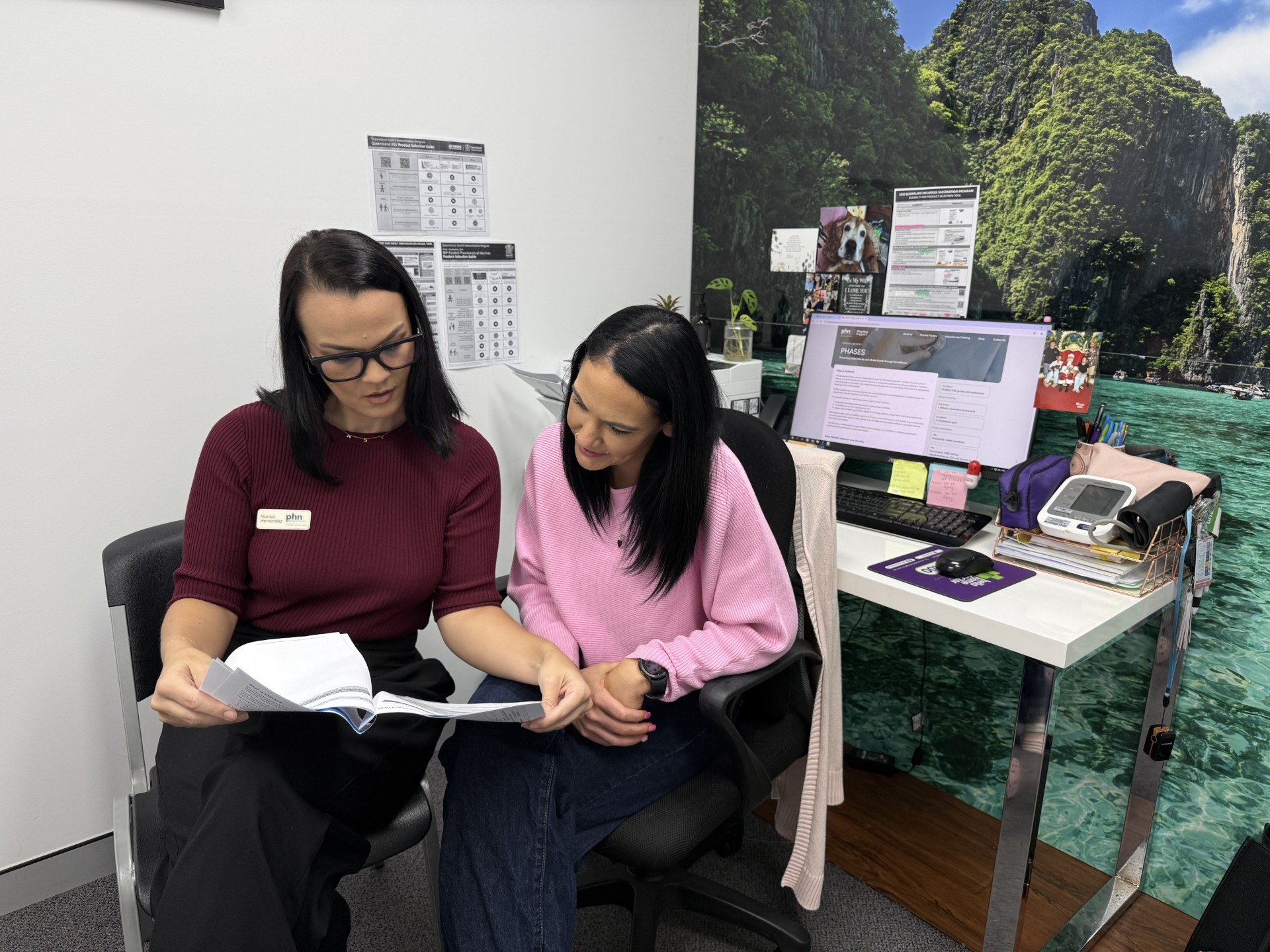
Utilise Brisbane North PHN's QI and D Team to strengthen quality improvement in your practice
Read More -
 16/08/26 | Primary care impact
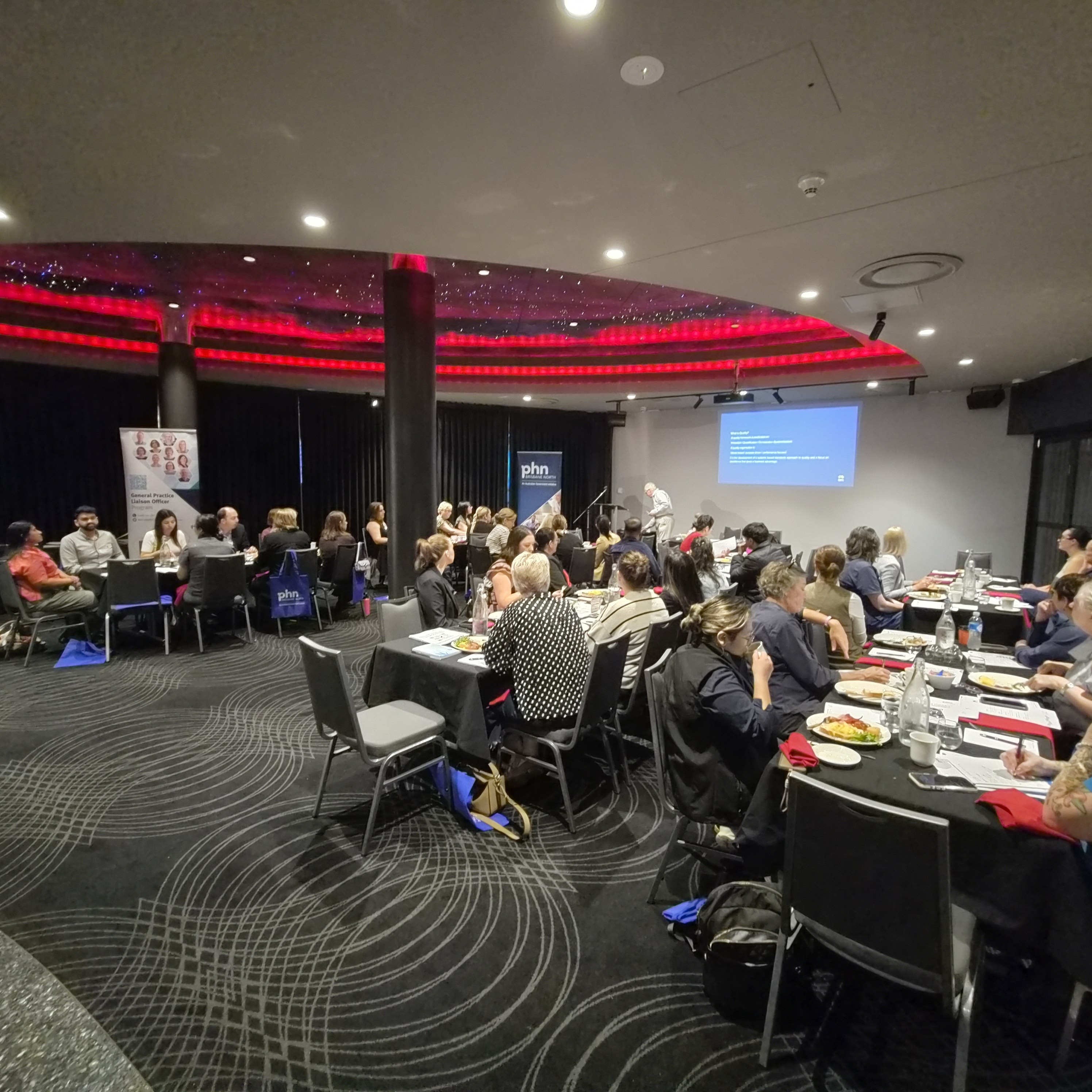
Networking event supports general practice teams with accreditation and AI
Read More